The Honest Sugar Pill
For fifty years we believed the placebo needed a lie. It never did.
The body is not background.
The Body edition covers what your physiology does when the mind looks away — yawning, growling, sweating, tickling, breathing, sleeping, the architecture of pain. One essay each morning on a system that runs you while you're elsewhere.
Filed by A. Renard, Body Editor.
All essays filed in this edition, newest first.
For fifty years we believed the placebo needed a lie. It never did.
A wound too small to bleed properly still hijacks one of the most sensitive instruments the body owns.
Aging was long treated as destiny. A handful of experiments suggest it behaves more like a setting.
Every night your brain climbs down through four stages and back again, and almost none of it is rest.
When illness kills your hunger, your body may be running a survival program half a billion years old.
A century of trying to read deception in the body, and why the science never held.
Cancer is less a moral verdict than a statistic written into the act of staying alive.
The urge to breathe has almost nothing to do with oxygen, and everything to do with a chemical your brain refuses to tolerate.
A rare genetic condition erases all pain, and in doing so reveals why the rest of us need it.
Cluster headaches arrive on schedule, leave no mark, and rank among the worst pains medicine can measure.
Chili peppers never burn anything. They only convince your body that they do, twice.
Every night you live entire stories, then wake with almost nothing. The forgetting may be the whole point.
Every human has a chin, no other animal does, and science still cannot agree on why.
Your smallest toe is a half-finished draft, caught between a life in the trees and one spent walking upright.
For centuries the mesentery was drawn as scattered scraps. It was one continuous organ all along.
Why the human jaw kept shrinking while the third molar refused to disappear.
Ancient viruses infected our ancestors millions of years ago, and they are still living inside us.
Blood types are not a quirk of biology. They are a ledger of the plagues your ancestors survived.
Autoimmune disease has climbed for fifty years, and the cause may be the world we cleaned away.
For centuries it wore the costume of demons. The mechanism was hiding in the brainstem all along.
When the brain is denied its nightly repair shift, the breakdown follows a predictable, escalating script.
When a relationship ends, the body mounts a defense it inherited from ancestors who feared a different kind of danger.
Some bodies block infection outright. Others fight a war so fast you never feel a single skirmish.
Why passengers turn green while the driver, in the very same car, feels nothing at all.
How a thought with no weight learned to inflame tissue, slow healing, and erode the heart.
For two thousand years doctors fought fever. The lizards knew better.
Allergies may be the price we pay for winning an ancient war against parasites.
Why mosquitoes single out some people and ignore others, and what the answer reveals about the skin we live in.
Your heart is not on the left. The reason it leans there began in a microscopic embryo.
The shaking hand before a speech is not a flaw. It is ancient survival code, leaking out where it has nowhere else to go.
Brain freeze is a case of mistaken identity playing out in the wiring behind your face.
How a single-celled parasite rewires the brains of its hosts, and what it might be doing in ours.
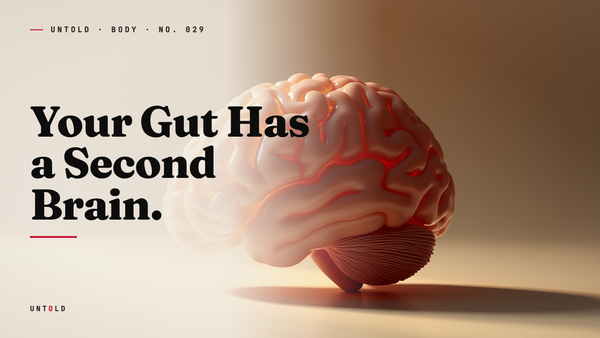
Half a billion neurons line your gut, and they were thinking long before your skull learned how.
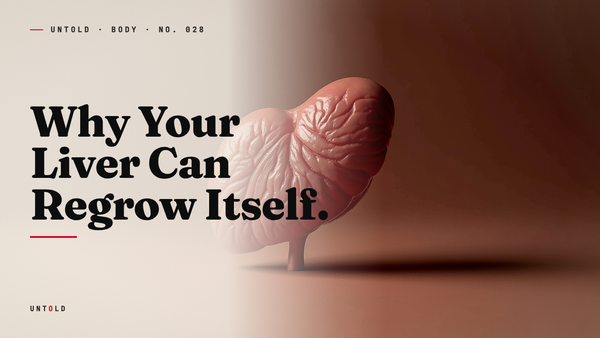
Cut away most of the liver and it rebuilds itself, but the way it does so is stranger than regrowth.
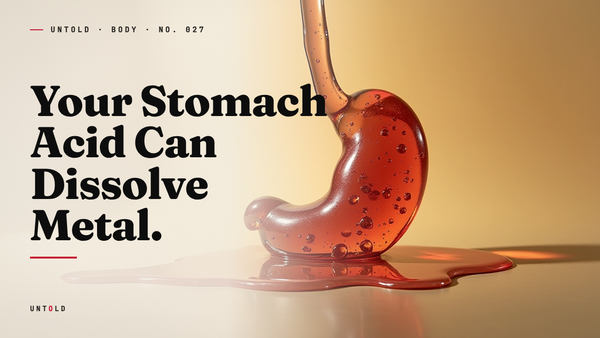
Your stomach holds a fluid strong enough to corrode steel, and the story of why it spares you runs through a frontier gunshot wound and a self-experimenting Nobel laureate.
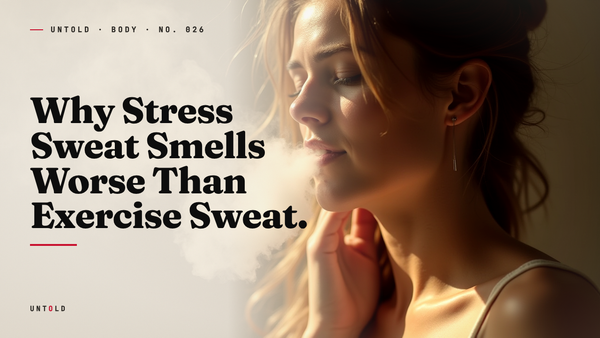
Why panic sweat clears a room while a five-mile run barely registers.
Why most of us lurch awake just as we drift off, and what the reflex remembers.
Hiccups may be a 370-million-year-old echo of the way our ancestors once breathed underwater.
Why the voice you hear inside your head is not the one the world has been listening to.
Why a soft chewing noise can feel like a physical assault, and what the brain is really doing.
No other animal weeps from grief or joy. The reason hides in our faces and our long childhoods.
Wrinkled fingers are not soaked skin. They are a nervous system making a decision.
Bacteria learned to outlast our best medicines, and we taught them how.
Your skeleton is not a dry museum prop. It bleeds, listens, and quietly runs your body.
Why we kept these two strips of hair when nearly every other became vestigial.
A vacuum, a bubble, and a string finally settled the oldest small mystery in the human body.
A bruise is not damage on display. It is the visible record of your body dismantling and recycling itself.
The pop you feel on a descending plane is a 400-million-year-old structure doing the only job it knows.
Why nearly every runner gets a stitch, and why science still cannot fully explain it.
Why nearly every healing wound demands to be scratched, and what that signal actually means.
What pins and needles reveal about the body's most underestimated communication system.
Goosebumps were dismissed as evolutionary debris. Then a Harvard lab looked closer.
What a fluttering eyelid reveals about an overworked nervous system, and when the twitch becomes a warning.
A common bathroom mystery sits at the intersection of two ancient nervous systems trading places.
A clear drop forms at the tip of your nose in winter. It is not a malfunction.
A tear gland, a ring of muscle, and the strange thermal engineering hidden in a reflex you never think about.
The hiccup makes no sense in a human body. It makes perfect sense in a tadpole's.
It is not the caffeine. It is a hormonal alarm system older than your morning routine.
The embarrassing rumble in your stomach is not hunger — it is a 500-million-year-old cleaning cycle.
For a century, medicine dismissed it as evolutionary debris. The microbiome rewrote the story.
Why two thousand years of medicine got yawning wrong, and what it actually reveals about the brain.