The Gasp Before Dawn: What Cold Water Does to a Sleeping Body
A cold shower does not wake you. Something far older, buried in your nervous system, does.
All essays filed in this edition, newest first.
A cold shower does not wake you. Something far older, buried in your nervous system, does.
A drink feels like fire against the cold, but the glow is heat leaving the body for good.
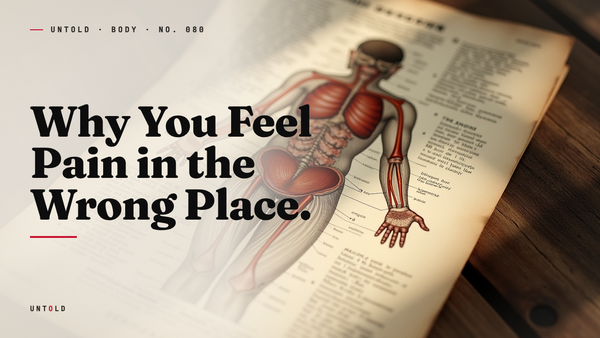
A heart attack often screams in the arm. The reason reveals how the brain builds pain from guesswork.
Your nervous system was never built to measure temperature. It was built to sound one alarm.
Almost everyone shuts their eyes at the moment of contact, and the reason has nothing to do with romance.
A Renaissance beauty trick, a Chicago psychologist, and the involuntary signal your pupils cannot suppress.
In orbit, the human body begins a quiet unraveling that mirrors the way we age on Earth.
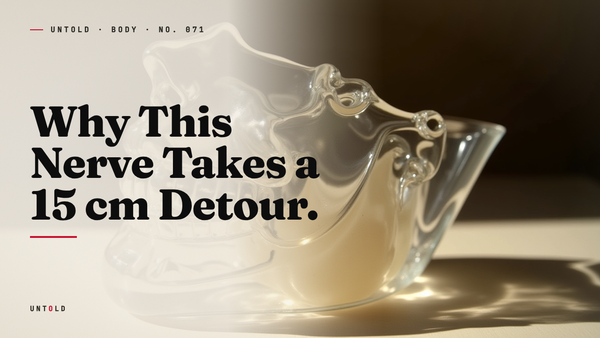
One nerve in your chest loops backward under an artery for no good reason, and that mistake is the clearest proof of evolution in your body.
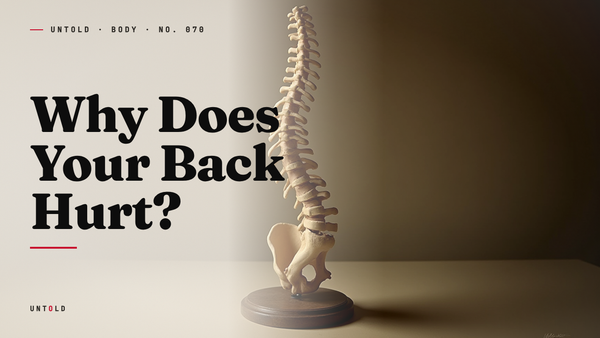
The ache in your lower back is a six-million-year-old compromise finally coming due.
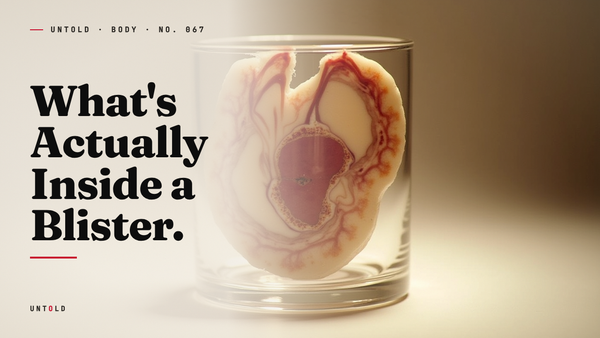
A blister is not a wound your body failed to prevent. It is a repair strategy, engineered in minutes.
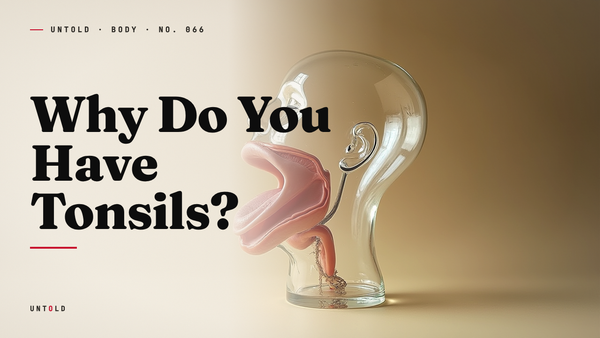
For a century, medicine treated tonsils as disposable. The evidence now suggests otherwise.
A reflex built to survive cold and predators now answers three minutes of sound.
The urge to breathe has almost nothing to do with oxygen, and everything to do with a chemical your brain refuses to tolerate.
Every human has a chin, no other animal does, and science still cannot agree on why.
Your smallest toe is a half-finished draft, caught between a life in the trees and one spent walking upright.
Why the human jaw kept shrinking while the third molar refused to disappear.
For two thousand years doctors fought fever. The lizards knew better.
The shaking hand before a speech is not a flaw. It is ancient survival code, leaking out where it has nowhere else to go.
Brain freeze is a case of mistaken identity playing out in the wiring behind your face.
Your stomach holds a fluid strong enough to corrode steel, and the story of why it spares you runs through a frontier gunshot wound and a self-experimenting Nobel laureate.
Hiccups may be a 370-million-year-old echo of the way our ancestors once breathed underwater.
No other animal weeps from grief or joy. The reason hides in our faces and our long childhoods.
Wrinkled fingers are not soaked skin. They are a nervous system making a decision.
Your skeleton is not a dry museum prop. It bleeds, listens, and quietly runs your body.
Why we kept these two strips of hair when nearly every other became vestigial.
A vacuum, a bubble, and a string finally settled the oldest small mystery in the human body.
A bruise is not damage on display. It is the visible record of your body dismantling and recycling itself.
Why nearly every healing wound demands to be scratched, and what that signal actually means.
Goosebumps were dismissed as evolutionary debris. Then a Harvard lab looked closer.
A common bathroom mystery sits at the intersection of two ancient nervous systems trading places.
A clear drop forms at the tip of your nose in winter. It is not a malfunction.
The hiccup makes no sense in a human body. It makes perfect sense in a tadpole's.