The Cleanse That Wasn't
How a multibillion-dollar industry sold us back the work our livers were already doing.
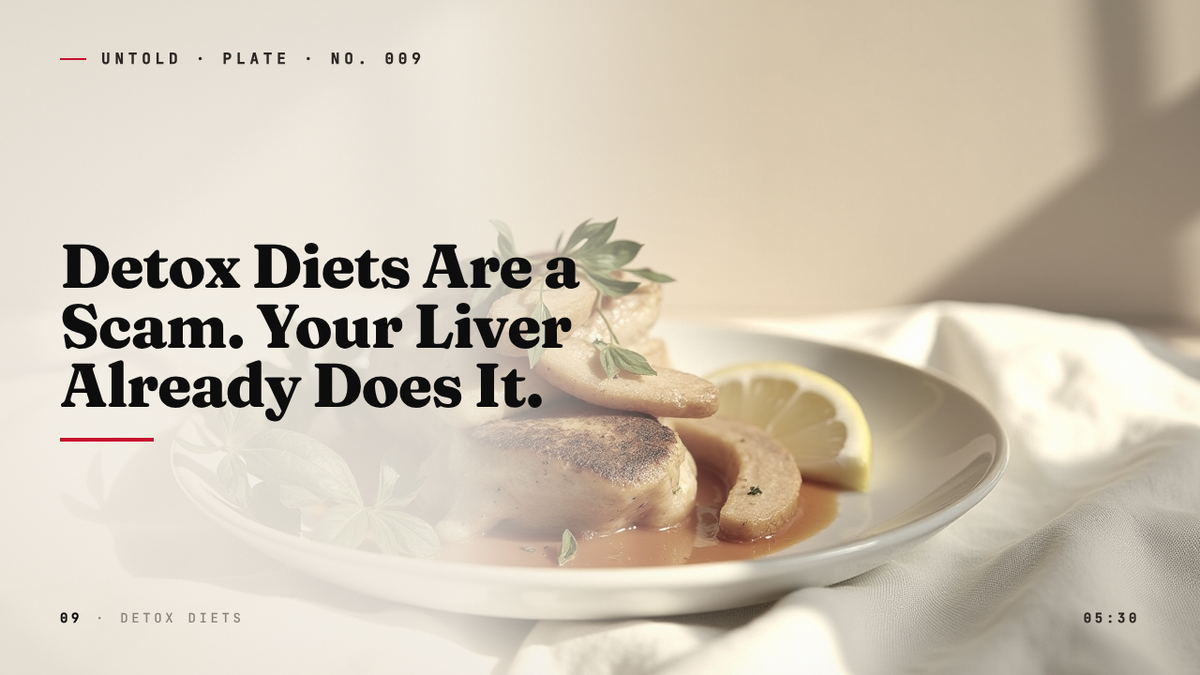
On the cover of a glossy magazine, a celebrity holds a glass of something green and luminous, the color of a swimming pool lit from below. Inside, she explains that she is on day four of a cleanse. She feels lighter. Her skin is clearer. The toxins, she says, are leaving her body.
Which toxins, exactly, the article does not say. It rarely does.
This is the strange grammatical hole at the center of one of the most profitable categories in modern wellness. The global market for detox and cleansing products is now estimated at more than five billion dollars a year, a figure that has roughly doubled in the past decade 1. The shelves of any reasonably stocked pharmacy carry charcoal capsules, milk thistle tinctures, foot pads said to draw heavy metals out through the soles, teas marketed as a flat-belly fix, and powdered greens promising to alkalize the blood. Each product names a problem, toxins, and offers a solution. Almost none of them, when pressed, can specify what the problem actually is.
In 2009, a team of British researchers decided to press. Led by Edzard Ernst, then a professor of complementary medicine at the University of Exeter, the group contacted the manufacturers of fifteen popular detox products sold across the United Kingdom. They asked a single, courteous question: which specific toxin does your product remove, and what evidence do you have that it does so? Not a single company gave a coherent answer 2. Some redirected the researchers to vague marketing copy. Others simply stopped responding. Ernst’s conclusion, delivered in characteristically flat prose, was that the detox industry was, in his words, selling a lie.
The lie has a peculiar shape, because it is wrapped around a truth. The body does detoxify. It does so continuously, with extraordinary efficiency, and almost entirely without any help from juice.
The organ that beat the marketers to it
A healthy adult liver weighs roughly three pounds and sits, dark red and wedge-shaped, just under the right side of the rib cage. It is the largest internal organ in the human body, and by certain metrics the busiest. Every minute of every day, it filters around 1.4 liters of blood, roughly a quarter of the heart’s total output 3. It performs more than five hundred distinct biochemical functions, ranging from the synthesis of cholesterol and bile to the storage of vitamins and the regulation of blood sugar.
Among those functions is the transformation of substances that would otherwise harm you. Some of those substances arrive from outside: alcohol, caffeine, prescription drugs, pesticide residues, the byproducts of charred meat. Others are produced internally as the routine exhaust of metabolism, including ammonia from protein breakdown and the spent hormones the body no longer needs. The liver disposes of all of them through a two-step process that biochemists have understood in detail since the 1970s.
In phase one, a family of enzymes known as cytochrome P450 acts on incoming compounds, typically by adding or exposing a reactive chemical group. This often makes the intermediate molecule more reactive, not less, which is why phase one cannot operate in isolation. In phase two, the liver attaches small molecules, sulfate, glutathione, glucuronic acid, certain amino acids, to those intermediates. The attachments make the resulting compounds water-soluble, which is the whole point. Water-soluble waste can leave the body through urine or bile. Fat-soluble waste cannot 4.
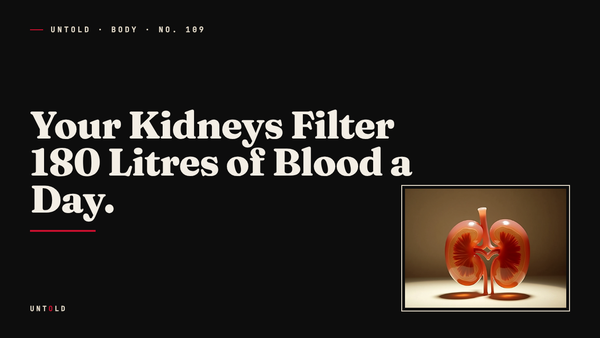
From there, the kidneys take over the next stage, filtering about 180 liters of fluid each day and concentrating the waste into roughly a liter and a half of urine. The lungs exhale volatile compounds. The gut shuttles bile-bound waste into the stool. The skin contributes a smaller share through sweat. The system is layered, redundant, and ancient. Versions of it appear in some form in nearly every vertebrate, and the core enzymatic machinery is conserved across roughly five hundred million years of evolutionary history.
It is, in short, very good at its job. And it does not require a cleanse.
A clean word for a dirty business
The modern detox industry has medical-sounding language but unmistakably commercial origins. The word detoxification itself is a legitimate medical term, used by physicians to describe the clinically supervised withdrawal of patients from alcohol, opioids, or heavy metals. It refers to specific protocols for specific poisons in specific people, often in hospital settings, often involving intravenous drugs and careful monitoring. This is not what is being sold in the wellness aisle.
The consumer version of detox grew out of the American counterculture of the late 1960s and 1970s, when health food cooperatives, macrobiotic diets, and the fasting traditions of various religious communities were repackaged for a broader audience. Books such as Stanley Burroughs’s The Master Cleanser, first self-published in 1976, prescribed a regimen of lemon juice, maple syrup, and cayenne pepper for ten days at a stretch. The promise was the removal of accumulated impurities, though the impurities themselves were left, again, conveniently undefined.
What the new industry did borrow from medicine, however, was a single, much older idea, attributed to the sixteenth-century Swiss physician Paracelsus and usually rendered as the dose makes the poison. The original Latin is more precise: sola dosis facit venenum. Paracelsus, who is often described as the founding figure of modern toxicology, argued that no substance is intrinsically toxic or intrinsically safe. Water can kill you if you drink enough of it. Oxygen, the molecule we cannot live without, oxidizes the tissues that house it. Botulinum toxin, one of the deadliest substances known, becomes a wrinkle treatment at the right dilution. Toxicity is not a property of a thing. It is a property of a relationship.
The detox industry inverted Paracelsus almost completely. It treats toxin not as a dose-dependent description but as a moral category, a class of bad substances that can be flushed out of the body in much the way one might rinse a glass. This is a useful framing for selling products. It bears very little resemblance to how the body actually works.
What the studies found, and did not find
In 2015, a team of Australian dietitians published a systematic review in the Journal of Human Nutrition and Dietetics, attempting to summarize the entire published literature on commercial detox diets. They cast a wide net, looking for any clinical trial of any commercial cleanse, juice fast, or detox regimen marketed to the general public. After excluding studies that were poorly designed or unrelated, they were left with a startlingly small set of papers, and a startlingly clear conclusion: there was, in the authors’ words, a striking lack of compelling evidence that detox diets remove toxins or produce sustained weight loss 5.
The number of commercial detox products with verified, peer-reviewed evidence that they remove any specific toxin from the human body is, by the most generous count, zero.
This does not mean the people who try cleanses are imagining their improvements. Many of them feel genuinely better, at least for a few days. The question is why. A typical seven-day detox eliminates alcohol, processed snacks, refined sugar, fried food, late-night eating, and often caffeine. It increases water intake and, depending on the regimen, the consumption of fruits and vegetables. Sleep frequently improves, partly because alcohol disrupts the architecture of sleep more than most people realize, and partly because heavy late meals interfere with both falling asleep and staying asleep. Digestion improves, because the gut is finally being given foods it can handle without complaint. Energy rises, because blood sugar is no longer spiking and crashing on a four-hour cycle.
None of this requires juice. None of it requires charcoal. None of it requires the word cleanse. As Catherine Collins, a senior dietitian who spent decades at St George’s Hospital in London, has put it, detox is a marketing myth rather than a medical concept, and a healthy liver does not need rescuing by celery 6. What the cleanse did, in almost every case, was provide a temporary structure for not eating things that were already bothering the eater. Strip the juice away and the improvement remains.
When the cure becomes the poison
For most people, a brief flirtation with a cleanse is harmless. The body is forgiving. A few days of inadequate calories will leave most healthy adults tired and irritable, perhaps lightheaded, but not damaged. The trouble begins at the extremes, and the extremes are where the industry’s marketing tends to live.
Prolonged juice fasts, particularly those that exclude protein and fat entirely, can produce a constellation of problems that doctors have catalogued in case reports for years. Severe caloric restriction triggers the breakdown of lean tissue, including the muscle tissue of the heart. Drinking large volumes of fluid without adequate sodium can produce hyponatremia, a dangerous dilution of blood sodium that can cause confusion, seizures, and in rare cases death. Aggressive use of laxative teas, often marketed under the polite term cleansing, can disrupt the colon’s normal motility and produce electrolyte imbalances severe enough to require hospitalization.
The bitterest irony belongs to the herbal supplements marketed as liver tonics. A 2017 case report in the World Journal of Gastroenterology described a patient who developed acute liver failure after using a green tea extract sold as a detoxifying cleanse 7. Concentrated green tea extracts, particularly those containing high doses of the polyphenol epigallocatechin gallate, have been linked to a small but growing number of cases of hepatotoxicity, the medical term for liver injury. The detox product, in other words, was poisoning the detox organ.
The pattern is not limited to green tea. The United States Drug-Induced Liver Injury Network, which tracks cases of liver damage caused by medications and supplements, has reported that herbal and dietary supplements now account for roughly twenty percent of cases of drug-induced liver injury in its registry, up from about seven percent a decade earlier 8. A substantial share of those supplements are marketed for cleansing, weight loss, or bodybuilding. The liver, it turns out, would generally prefer to be left alone.
The nutrient paradox
There is a quieter problem with extended cleanses, one that goes against the entire intuitive logic of the practice. The liver’s detoxification machinery is itself nutrient-dependent. The phase one enzymes require B vitamins, iron, and a steady supply of antioxidants to keep functioning without damaging surrounding tissue. The phase two enzymes need amino acids, the building blocks of protein, to attach to the intermediates that phase one has produced. Glutathione, the master antioxidant inside liver cells, is built from three amino acids: cysteine, glycine, and glutamate. Without them, the assembly line stalls.
A juice fast, by design, supplies almost no protein. It is a regimen of sugar and water, dressed up with vitamins. The body, deprived of incoming amino acids, eventually begins to break down its own muscle tissue to keep essential processes running. In the short term, the practical effect on detoxification is modest, because the liver has reserves. Over longer fasts, the effect compounds. The cleanse, marketed as fuel for detoxification, in fact starves the very pathway it claims to support.
The research literature here is unambiguous. The liver does its best work when it is fed a varied diet adequate in protein, fiber, water, and micronutrients, and when it is not asked to process more alcohol or fructose than it can comfortably handle. There is no special food, juice, root, or powder that has been shown to accelerate this process beyond its normal pace in a healthy person. The pace, fortunately, is already very fast.
What actually helps
The interventions that genuinely support liver health are not the kind of thing one would put on a magazine cover. They include sleeping enough hours, drinking water in normal quantities, eating fiber from beans and whole grains and vegetables, and limiting alcohol to amounts the liver can clear without injury. They include maintaining a body weight that does not lead to fat accumulating inside the liver itself, a condition now called metabolic dysfunction-associated steatotic liver disease, which has quietly become the most common form of chronic liver disease in much of the world.
There is one delightfully unglamorous finding that recurs in the epidemiology of liver health, and it concerns coffee. A 2021 study using data from nearly half a million participants in the UK Biobank found that drinking coffee, including decaffeinated coffee, was associated with a roughly twenty percent reduction in the risk of chronic liver disease and a roughly fifty percent reduction in the risk of death from chronic liver disease 9. The protective association held across instant coffee, ground coffee, and caffeinated and decaffeinated varieties. The mechanism is not fully understood, though compounds in coffee appear to reduce liver inflammation and the buildup of fibrous scar tissue.
There is no charcoal in the recipe. There is no cayenne, no celery juice, no seven-day suffering. There is, occasionally, milk and sugar.
This is the shape of most honest advice about the liver. It is undramatic, cumulative, and difficult to put on a label. It does not photograph well. It cannot be priced at eighty dollars a bottle. It accomplishes what the cleanse promises and the cleanse cannot deliver, because the cleanse was never the mechanism. The mechanism was already inside you, working before you woke up this morning, working while you read this sentence, working with the steady indifference of a system that has had five hundred million years to refine itself.
The thing the industry sells
What, then, is the detox industry actually selling? Not toxin removal: nobody can name the toxin. Not improved liver function: the studies cannot find the improvement. Not even, in many cases, a coherent intervention: the regimens vary wildly, and many contradict one another.
What it sells is a feeling. The feeling is the conviction that one has done something deliberate about one’s body, that the chaos of modern life, the takeout containers, the late-night wine, the diet of bright screens and brighter food, can be paused and partly undone through a brief act of dietary penance. That feeling is real, and there is no reason to mock it. The desire to reset, to begin again, to mark a boundary between a regretted past and an improved future, is one of the oldest human impulses. Religions have organized around it. So have New Year resolutions. So, now, has a five-billion-dollar consumer category.
The wellness industry’s particular trick is to take that ancient impulse and route it through a purchase. It sells back to its customers, in the form of products, what their bodies were already doing for free. The packaging is elegant. The language is medicinal. The pricing is firm. And the product itself, when examined closely, is the same thing the liver has been quietly producing every minute since birth.
This is not, in the end, an argument against trying to feel better. It is an argument for noticing who is doing the work. The next time a cleanse is offered, with its promises of reset and renewal and the flushing of unnamed impurities, it may be worth pausing for a moment to consider the organ tucked under the right rib cage, three pounds of dense red tissue running half a thousand chemical reactions in the time it takes to read this sentence. It has been working through the entire conversation. It will keep working long after the conversation ends. It does not require thanks. But it has, certainly, earned them.
Sources
- Grand View Research, Detox Products Market Size & Share Analysis Report, 2023. — https://www.grandviewresearch.com/industry-analysis/detox-products-market-report
- Ernst, E., ‘Alternative detox,’ British Medical Bulletin, 2012. — https://academic.oup.com/bmb/article/101/1/33/331140
- Kalra A., Yetiskul E., Wehrle C. J., Tuma F., ‘Physiology, Liver,’ StatPearls, 2023. — https://www.ncbi.nlm.nih.gov/books/NBK535438/
- Almazroo, O. A., Miah, M. K., Venkataramanan, R., ‘Drug Metabolism in the Liver,’ Clinics in Liver Disease, 2017. — https://pubmed.ncbi.nlm.nih.gov/28364849/
- Klein, A. V. and Kiat, H., ‘Detox diets for toxin elimination and weight management: a critical review of the evidence,’ Journal of Human Nutrition and Dietetics, 2015. — https://onlinelibrary.wiley.com/doi/10.1111/jhn.12286
- Collins, C., quoted in ‘The detox myth,’ The Guardian, 2014. — https://www.theguardian.com/lifeandstyle/2014/dec/05/detox-myth-health-diet-science-ignorance
- Patel, S. S., Beer, S., Kearney, D. L., Phillips, G., Carter, B. A., ‘Green tea extract: a potential cause of acute liver failure,’ World Journal of Gastroenterology, 2013. — https://www.ncbi.nlm.nih.gov/pmc/articles/PMC3681138/
- Navarro, V. J. et al., ‘Liver injury from herbal and dietary supplements,’ Hepatology, 2017. — https://pubmed.ncbi.nlm.nih.gov/27677775/
- Kennedy, O. J. et al., ‘All coffee types decrease the risk of adverse clinical outcomes in chronic liver disease: a UK Biobank study,’ BMC Public Health, 2021. — https://bmcpublichealth.biomedcentral.com/articles/10.1186/s12889-021-10708-w
- Paracelsus, Die dritte Defension wegen des Schreibens der neuen Rezepte, 1538, summarized in Borzelleca, J. F., ‘Paracelsus: herald of modern toxicology,’ Toxicological Sciences, 2000. — https://academic.oup.com/toxsci/article/53/1/2/1673161
Related reading