How Popcorn Conquered the Movie Theater
The world's favorite cinema snack was once banned as low-class street food. A depression and a war changed everything.
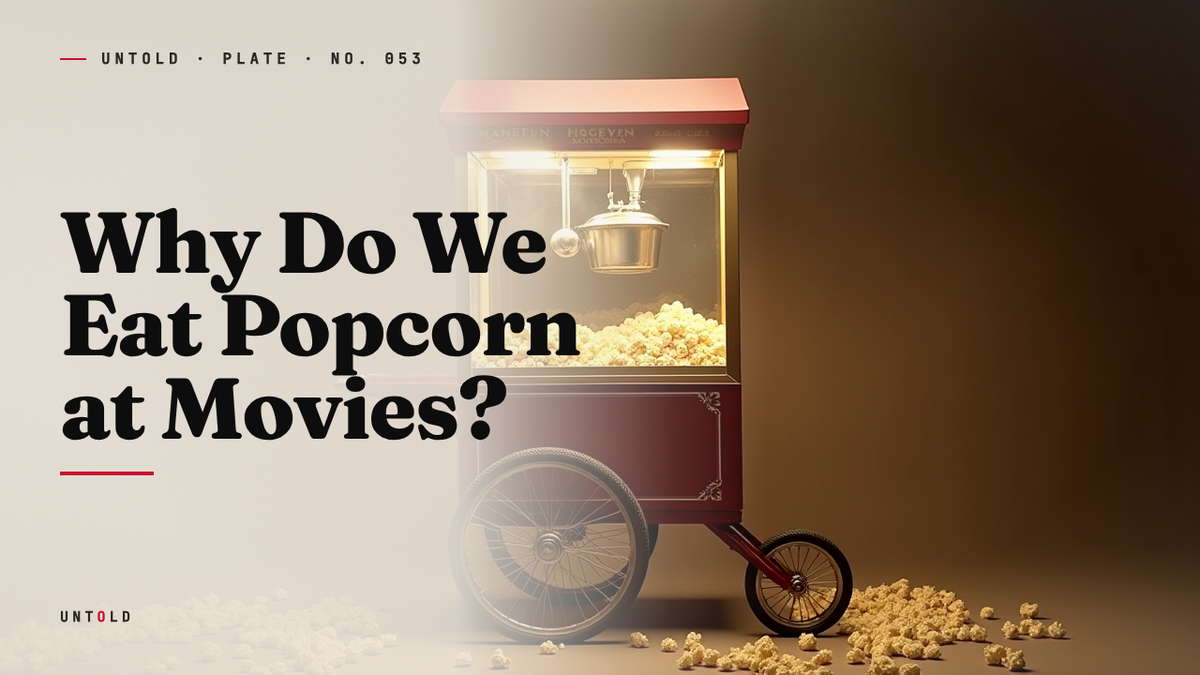
A bucket of popcorn costs a movie theater almost nothing to produce. The kernels are among the cheapest agricultural commodities on the planet. A little oil, a little heat, a paper vessel stamped with a logo. Yet at the concession counter, that same bucket sells for a price that would make a commodities trader blush. This is not an accident, and it is not simple greed. It is the visible tip of an economic arrangement so central to the modern cinema that, without it, the industry as we know it would not exist.
Today, concession sales can account for as much as 85 percent of a theater’s profit. The film itself, the reason anyone walks through the door, is closer to a loss leader. Studios take a punishing share of ticket revenue, especially in a blockbuster’s opening weekend, leaving exhibitors with thin margins on the seats they fill. What keeps the projector running and the doors open is the snack. And the snack, overwhelmingly, is popcorn.
Why popcorn, though? Not chips. Not pretzels. Not the endless varieties of candy that also line the counter. A puffed kernel of corn has become so fused with the act of watching a film that the two feel inseparable, as if one were biologically required for the other. The strange truth is that this pairing is barely a century old, and for the first stretch of cinema history, theater owners considered popcorn an insult to everything they were trying to build. The story of how it won its place involves an ancient grain, a stubborn snack, an economic catastrophe, a world war, and a handful of entrepreneurs who saw money where everyone else saw a mess.
An ancient grain with a violent trick
Popcorn is not a modern invention. It is one of the oldest prepared snacks that humans have ever eaten. Archaeologists working in Peru have recovered popped corn kernels and corncobs dating back thousands of years, evidence that people were coaxing this particular explosion out of maize long before written history 1. Indigenous peoples across the Americas cultivated varieties of corn specifically suited to popping, and the practice spread widely across the continent.
The mechanism is a small marvel of physics. A popcorn kernel is unlike other corn. It has a hard, moisture-sealing hull surrounding a dense center of starch and a droplet of water. When the kernel heats past roughly 180 degrees Celsius, the trapped water flashes to steam and the internal pressure climbs until the hull can no longer contain it. The kernel bursts, the gelatinized starch expands into the airy white shape we recognize, and the whole thing turns inside out in a fraction of a second. It is, in effect, a tiny pressure bomb of starch, and its appeal is inseparable from that transformation: cheap, dramatic, and satisfying.
By the nineteenth century, popcorn had become a common street food in the United States. It was cheap to buy, cheap to make, and easy to sell in the open air. What turned it from a regional curiosity into a national fixture was a piece of machinery. In 1885, a Chicago candy-shop owner named Charles Cretors built the first mobile, steam-powered popcorn machine 2. His invention could pop corn in oil while parked on a busy corner, filling the air with the smell of fresh popping. Suddenly the snack could be manufactured anywhere a crowd gathered, and made in full view of hungry passersby.
Cretors machines soon appeared at fairs, circuses, carnivals, and street corners across the country. A bag cost between five and ten cents, an amount within reach of nearly anyone with a coin in their pocket. Popcorn became the democratic snack, mobile and inexpensive and everywhere. Everywhere, that is, except the one place it would eventually make its permanent home.
The theater that wanted to be an opera house
The early movie theater was engaged in a project of respectability. In the 1910s and 1920s, as cinema clawed its way up from the nickelodeon and the vaudeville hall, the grand movie palaces that opened in American cities aspired to the dignity of the opera house or the legitimate theater. They installed plush carpets and velvet seats, hung chandeliers from ornate ceilings, and dressed their ushers in crisp uniforms. The goal was to reassure a middle-class audience that watching a film was a refined evening out, not a cheap amusement for the rabble.
Into this carefully constructed atmosphere, popcorn arrived like a stain. To theater owners, it was everything they were trying to escape: messy, noisy, greasy, and hopelessly associated with the street vendor and the carnival midway. The image was of butter-slicked fingers on velvet upholstery and crushed kernels ground into expensive carpet. One can almost hear the objection: we do not want that street food ruining our theaters. Popcorn belonged outside, with the crowds and the noise, not inside, where the illusion of gentility had to be maintained.
The films themselves reinforced this exclusion. Silent movies required their audiences to read. Dialogue and plot arrived through title cards flashed on the screen, which meant a night at the pictures demanded literacy and attention. This naturally skewed audiences toward the wealthier and better educated, people accustomed to consuming culture in a hushed, attentive silence. A rustling bag of popcorn would have been an intrusion on the reading room. For as long as movies were silent, the refined quiet of the theater and the boisterous appeal of the snack simply could not coexist.
Then the ground shifted. In 1927, The Jazz Singer brought synchronized sound to the screen, and within a few years the silent era was over. The transformation was not merely technical. Once films could be heard rather than read, the barrier to entry collapsed. You no longer needed to be literate to follow a story. Cinema opened its doors to a far broader public, including the working-class audiences who had always been comfortable with a snack in hand. The stage was set for popcorn’s invasion. It only needed a push. That push came in the form of national disaster.
Depression, and the arithmetic of survival
In 1929, the American economy collapsed. The Great Depression wiped out savings, closed businesses, and left millions without work or income. For an industry that sold a discretionary luxury, this should have been a death sentence. And yet the movies proved remarkably durable. In an era when there was almost no money for anything, a few hours in a darkened theater offered one of the only affordable escapes left. People still craved distraction, perhaps more than ever, and the price of admission had fallen within reach of the desperate.
So, too, had popcorn. A movie ticket and a bag of popcorn together cost mere pennies, which made the snack one of the few small luxuries the poor could still afford. Street vendors understood this instantly. They wheeled their popping machines directly outside theater entrances, selling bags to the crowds streaming in. Moviegoers bought their popcorn on the sidewalk and smuggled it past the ushers into their seats. Theater owners fought the tide with signs and enforcement, hiring staff to confiscate the contraband snack at the door. For a while, the old prejudice held.
Then the numbers spoke, and they spoke with brutal clarity. Theaters that permitted popcorn, or better yet sold it themselves, tended to survive the Depression. Many that clung to their no-food policies went dark. Concession sales were not a garnish on the business; they were increasingly the thing keeping the business alive. The margin on a bag of popped corn dwarfed anything a ticket could return, and in a period when every cent mattered, that margin was the line between solvency and closure.
A few enterprising individuals grasped the opportunity before the industry did. Among the most successful was Julia Braden, a businesswoman in Kansas City who negotiated with a local theater to sell popcorn inside its lobby rather than out on the street 3. By the late 1930s she had built a small empire, operating stands in several theaters across the city. She reportedly earned upward of 14,000 dollars a year at a time when that was an extraordinary sum, more than many theater managers made from the films themselves. Braden’s success was a demonstration nobody could argue with. The snack was the money.
One by one, theater owners reversed a generation of resistance. They stopped fighting popcorn and started selling it. Coat rooms and lounges, remnants of the opera-house era, were torn out and replaced with concession counters. The lobby, once a place of hushed arrival, became a marketplace. What had been unthinkable a decade earlier was now standard practice, and the physical architecture of the theater was rebuilt around the sale of food.
War, sugar, and a patriotic snack
If the Depression opened the door for popcorn, the Second World War slammed it shut behind. When the United States entered the war, sugar became one of the most tightly rationed commodities on the home front. Much of the world’s sugar supply was disrupted by the conflict, and what remained was diverted toward the war effort. For candy makers, this was a crisis. Their entire product line depended on the ingredient now locked behind ration books.
Popcorn had no such vulnerability. It required no rationed sugar at all, only corn and oil and heat, and American corn was abundant. As candy grew scarce and expensive, popcorn stepped effortlessly into the gap. Consumption surged. By some accounts, Americans ate roughly three times as much popcorn during the war years as they had before 4. The snack became not merely available but faintly patriotic, a treat you could enjoy without feeling you were hoarding a rationed good needed by soldiers overseas.
By the time the war ended, the pairing was permanent. Two decades earlier, popcorn had been banned from the theater as an embarrassment. Now it was so thoroughly woven into the experience of going to the movies that the connection felt natural, even inevitable. The Depression had proven that concessions kept theaters alive, and the war had made popcorn the concession of choice. The ritual was locked in place, and it has never come loose since.
The scent that sells
Here the story takes a turn that reveals what popcorn at the movies has really been about all along. It was never, fundamentally, about hunger. Walk into almost any theater today and the smell of hot butter reaches you before you have seen a single frame. That aroma is not an accident of the kitchen. It is a deliberate instrument of commerce.
Smell occupies a peculiar place in human cognition. Olfactory signals travel to the brain along a pathway closely tied to the regions that govern memory and emotion, which is why a particular scent can summon a vivid recollection or a sudden pang of appetite 5. Theaters learned, whether by design or by trial and error, that fresh-popped corn releases an aroma powerful enough to trigger craving in people who were not remotely hungry when they arrived. So they pop the corn fresh and let the scent drift outward into the lobby, priming the appetite before a customer reaches the counter.
The economics that follow are staggering. A large tub of popcorn can carry a markup of well over a thousand percent above the cost of its ingredients. In practical terms, the customer is not paying for corn at all. The corn is nearly free. What is being sold is a feeling: the anticipation of the film, the memory of childhood outings, the sensory ritual of the darkened room. The popcorn is a delivery mechanism for that experience, and the price reflects the value of the feeling rather than the substance.
This is the quiet engine of the modern cinema. The film sells the ticket, but the popcorn keeps the lights on. Every element of the concession stand, from the placement of the poppers to the drift of the scent to the size of the tubs, has been shaped by a century of learning what makes people reach for their wallets in a moment of pleasurable anticipation.
What you inherit at the counter
There is something almost tender in the fact that a snack once dismissed as too vulgar for a proper theater is now the financial foundation of the whole enterprise. Popcorn did not conquer the movies through marketing or design. It slipped in through a side door opened by desperation, when a broken economy stripped away the pretensions of the opera-house era and left owners with a simple choice: sell the cheap snack or go dark. It stayed because a world war handed it an advantage no competitor could match.
So the next time the smell of butter finds you in a cinema lobby, it is worth pausing over what that scent actually carries. It is the residue of a depression that made an affordable luxury precious. It is the echo of a rationing regime that spared corn while starving candy. It is the legacy of vendors and entrepreneurs who understood, before the industry did, that people will pay generously for a small pleasure attached to a larger one. You are not simply craving a snack. You are participating in a survival story that happens to taste like salt and butter, and to smell like an invitation you were always going to accept.
Sources
- Smith, Andrew F., Popped Culture: A Social History of Popcorn in America, University of South Carolina Press, 1999. — https://uscpress.com/Popped-Culture
- Cretors Company, History of the Popcorn Machine (Charles Cretors, 1885). — https://www.cretors.com/about-us/history
- Geiling, Natasha, Why Do We Eat Popcorn at the Movies?, Smithsonian Magazine, 2013. — https://www.smithsonianmag.com/arts-culture/why-do-we-eat-popcorn-at-the-movies-475063/
- National Association of Theatre Owners / historical concession data cited in Smithsonian, 2013. — https://www.smithsonianmag.com/arts-culture/why-do-we-eat-popcorn-at-the-movies-475063/
- Herz, Rachel S., The Role of Odor-Evoked Memory in Psychological and Physiological Health, Brain Sciences, 2016. — https://www.ncbi.nlm.nih.gov/pmc/articles/PMC4931495/
- Popcorn Board, History of Popcorn: Ancient Origins and Peruvian Archaeology. — https://www.popcorn.org/Facts-Fun/History-of-Popcorn
Related reading