The Sweetness Problem
A century of accidents, rat tumors, and gut bacteria has left one question stubbornly unresolved.
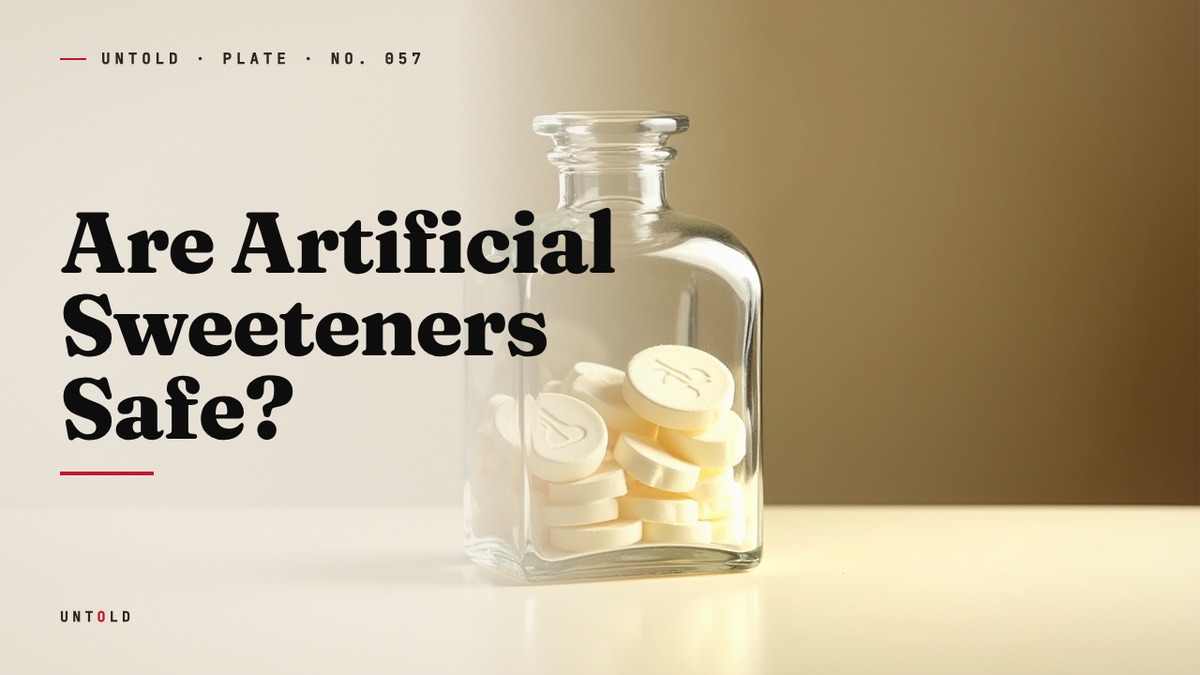
In the winter of 1879, a chemist at Johns Hopkins University sat down to dinner and noticed something strange about his bread. It was impossibly sweet. Sweeter than any sugar he had tasted, sweet in a way that clung to the tongue and refused to leave. He had not sweetened it. His wife had not sweetened it. The sweetness, he eventually realized, was coming from his own hands.
Constantin Fahlberg had spent the day in the laboratory of Ira Remsen, working with derivatives of coal tar, the thick black residue left over from processing coal into gas and coke. He had forgotten to wash his hands before eating. Somewhere on his fingers was a residue of a compound the two men had synthesized, and it carried a sweetness roughly three hundred times more intense than table sugar. Fahlberg went back to the lab, tasted his way methodically through the beakers and dishes until he found the source, and gave the compound a name: saccharin.
That accident, born of a forgotten handwash, launched a question that has refused to die quietly for nearly a century and a half. Are artificial sweeteners safe? The answer has swung wildly between yes and no, propelled by cancer scares, government bans, quiet reversals, and headlines that screamed in both directions. The real answer, it turns out, is stranger and quieter than either camp would like.
A war over honest sweetness
Saccharin arrived at a useful moment. By the turn of the twentieth century it was sweetening foods and drinks without adding a single calorie, a near-magical property for anyone who could not tolerate sugar. Diabetics embraced it. Sugar manufacturers, watching a rival that cost pennies to produce and outperformed their product by orders of magnitude, viewed it with alarm.
The first serious attack came not from the sugar lobby but from a crusading government chemist. Harvey Washington Wiley, the head of what would become the Food and Drug Administration, was one of the great moral entrepreneurs of American food safety. He had spent years exposing adulterated products, and to Wiley, saccharin was a fraud dressed up as an ingredient. It fooled the tongue into perceiving nourishment where none existed. Anyone who ate a food sweetened with saccharin rather than sugar, he argued, had been deceived about what they were consuming.1
Wiley took his campaign all the way to the White House, and there it collided with an inconvenient fact. President Theodore Roosevelt ate saccharin every day, on the advice of his physician, and considered himself perfectly healthy. When Wiley denounced the compound in a meeting, Roosevelt reportedly snapped that anybody who said saccharin was injurious to health was an idiot. The battle over sweetness had a formidable opponent at the top, and Wiley lost. Saccharin stayed on the shelves.
For decades it ruled largely unchallenged, its market swelling during two world wars when sugar was rationed and scarce. But sweetness, it turned out, was a field ripe for accidents.
A licked finger and a new rival
In 1965, a chemist named James Schlatter was working at the pharmaceutical company G. D. Searle on a compound intended to treat ulcers. The synthesis involved an intermediate made from two amino acids, aspartic acid and phenylalanine. At some point Schlatter licked his finger to help him lift a piece of paper, and tasted the same uncanny sweetness that had ambushed Fahlberg eighty-six years earlier.2
He had discovered aspartame, a sweetener roughly two hundred times sweeter than sugar. Unlike saccharin, which some people found metallic or bitter on the aftertaste, aspartame tasted remarkably clean, remarkably like sugar itself. It would eventually become the sweetener in countless diet sodas, the little blue and pink packets on restaurant tables, the invisible ingredient in gum and yogurt and drink mixes. Today, by various estimates, around forty percent of American adults consume artificial sweeteners regularly, most of them without much thought about where these molecules came from or what they do.
But before aspartame could conquer the market, the entire category of artificial sweeteners was about to face its greatest crisis.
The rats that changed everything
In the early 1970s, researchers began feeding saccharin to laboratory rats in enormous quantities to test for long-term harm. The doses were staggering, equivalent in human terms to drinking hundreds of cans of diet soda a day, sustained across the animals’ entire lives and sometimes across generations. The results were alarming. Some of the rats, particularly the males, developed tumors in their bladders.3
Panic followed almost instantly. In 1977, Canada banned saccharin outright. The United States Food and Drug Administration, operating under a strict provision called the Delaney Clause, which forbade any food additive shown to cause cancer in animals at any dose, moved to ban it as well. What happened next was one of the more remarkable public revolts in the history of food regulation.
Saccharin was, at the time, the only artificial sweetener widely available in the United States. For diabetics and for people trying to manage their weight, a ban felt like an assault on their daily lives. The public flooded Congress with objections. Rather than enforce the ban, Congress passed a moratorium and required something unusual instead: a warning label. For more than two decades, saccharin products in the United States carried an ominous notice informing consumers that the sweetener had been found to cause cancer in laboratory animals. It sat there on the packaging, a small printed anxiety, following millions of people through their grocery aisles.
And then, slowly, the science caught up to the fear and dismantled it.
Why the rat study did not apply
The crucial work came from researchers who refused to accept the tumors at face value and instead asked a more precise question. Why, exactly, did those bladders react so violently? Samuel Cohen, a pathologist at the University of Nebraska, was among those who traced the mechanism. What they found was a story specific to the peculiar chemistry of the male rat.4
Rat urine differs from human urine in important ways. It is more concentrated, higher in pH, and richer in certain proteins and minerals. When rats consumed massive quantities of saccharin, the compound interacted with this distinctive urinary chemistry to form microscopic crystals, essentially tiny abrasive particles. Over a lifetime of exposure, those crystals irritated the lining of the bladder. The constant irritation drove the cells to divide and regenerate again and again, and that relentless proliferation eventually produced tumors.
The key point was that the crystals depended entirely on conditions found in the rat bladder and not in the human one. Human urine simply does not have the chemistry required to precipitate them. The tumors were not caused by saccharin acting as a carcinogen in the ordinary sense, poisoning DNA or triggering mutation. They were caused by a physical irritation that could occur only in a specific animal under specific, extreme conditions.
In 2000, after years of accumulating evidence, saccharin was officially removed from the United States government’s list of substances reasonably anticipated to be human carcinogens.5 The warning labels came off. The cancer scare that had shadowed the sweetener for a generation collapsed, and it collapsed for a reason worth remembering. The famous rat study had never applied to humans at all. It had been a real result answering a question about rats, misread as a question about people.
Aspartame, arriving on the market during and after this saga, was subjected to some of the most intense regulatory scrutiny any food additive has ever faced. Over a hundred studies examined it across decades, probing its metabolism, its breakdown products, and its potential links to everything from headaches to seizures to cancer.6 Regulators set an acceptable daily intake with an enormous built-in safety margin. To reach the FDA’s limit, an average adult would need to drink roughly fourteen cans of diet soda every single day, a threshold that for most people is essentially unreachable. There is one genuine exception: people with the rare genetic disorder phenylketonuria cannot metabolize phenylalanine, one of aspartame’s components, which is why diet products carry a warning aimed specifically at them.
So the cancer question, for practical purposes, was answered. The verdict was reassuring. Case closed.
Except it was not.
The danger nobody was looking for
The real controversy over artificial sweeteners turned out to have almost nothing to do with cancer. It had to do with the trillions of bacteria living in the human gut.
In 2014, a team of Israeli scientists led by Eran Elinav and Eran Segal at the Weizmann Institute published a striking paper in the journal Nature.7 Their central finding was counterintuitive to the point of irony. Artificial sweeteners, the very compounds designed to help people avoid the blood-sugar spikes of ordinary sugar, appeared in some cases to do the opposite. In mice fed saccharin, the researchers observed the development of glucose intolerance, a metabolic state in which the body handles sugar less effectively, and which is a precursor to type 2 diabetes.
The mechanism was the surprise. The sweeteners were not acting on the animals’ cells directly. They were reshaping the composition of the gut microbiome, the vast community of microorganisms in the intestine. The altered bacterial population, in turn, changed how the host processed sugar. When the researchers transplanted gut bacteria from sweetener-fed mice into germ-free mice, the recipients developed glucose intolerance too, strong evidence that the microbes, not the molecule alone, were driving the effect.
The team also ran a small experiment in humans. A subset of volunteers who consumed saccharin developed poorer glucose responses within a week, and their gut bacteria shifted in ways that mirrored the mice. Others showed no such effect. The response, in other words, was personal. It depended on the ecosystem each person happened to carry.
This was a fundamentally different kind of concern than a rat’s bladder tumor. It suggested that even at approved, everyday doses, artificial sweeteners might not be biologically inert. They might be quietly interacting with the body’s microbial partners in ways that vary from one person to the next.
What the evidence actually says
It would be easy to seize on the microbiome research and declare artificial sweeteners dangerous after all. That would be a mistake, and the same mistake the saccharin panic made in reverse. The human evidence remains genuinely messy. Some studies find metabolic effects, others find none. Mouse results do not always translate. The individual variation the Weizmann team observed cuts both ways, meaning many people may experience no measurable effect at all.
Regulatory bodies have tried to hold this ambiguity honestly. In 2023, the World Health Organization issued a carefully worded advisory recommending against the use of non-sugar sweeteners as a strategy for long-term weight control, noting that the evidence for their benefit was weak and that they might carry undesirable effects with prolonged use.8 That same year, a WHO cancer agency classified aspartame as possibly carcinogenic to humans, placing it in a category that also famously includes pickled vegetables and aloe vera extract.9
That word, possibly, does an enormous amount of work, and it is routinely misread. The classification describes the strength of the evidence, not the size of the risk. It means the data are limited and inconclusive, not that a can of diet soda is a proven hazard. In the same breath, the agency responsible for setting safe intake levels reaffirmed aspartame’s existing acceptable daily intake, concluding there was no convincing reason to change it. Regulators worldwide continue to consider approved sweeteners safe at normal levels of consumption.
The throughline across the entire century, from Fahlberg’s dinner table to the Weizmann Institute, is dose. The rats got tumors on quantities no human would ever ingest. The cancer classifications rest on exposures far beyond ordinary consumption. Even the microbiome effects appeared under conditions of regular, deliberate intake. Nothing in the science supports the idea that occasional use of an approved sweetener is poisonous, and nothing supports the idea that these compounds are a free pass, a way to consume sweetness with no biological consequence whatsoever.
The quiet answer
So are artificial sweeteners safe? The honest reply is quieter than any headline you have read, and it resists the tidy resolution the question seems to demand. They are not the carcinogens the warning labels once implied. The rat study that terrified a generation was answering a question about rats. But neither are they a magic escape from the metabolic realities of sweetness. Something happens when the body encounters them, and for at least some people, that something may not be entirely benign.
The truth lives, as it so often does in nutrition science, in the dose and in the individual. The next time you sip a diet soda, it is worth remembering the whole strange story folded into the can: a chemist who forgot to wash his hands, another who licked his finger, a wave of rat tumors that never should have alarmed anyone about human health, and a hidden world of gut bacteria that we are only beginning to understand. A century of accidents and fear, and the sweetness problem is still, in the most interesting sense, unsolved.
Sources
- Fahlberg, C. and Remsen, I., “Ueber die Oxydation des Orthotoluolsulfamids,” Berichte der deutschen chemischen Gesellschaft, 1879. — https://onlinelibrary.wiley.com/journal/10990682c
- Mazur, R. H., “Discovery of aspartame,” in Aspartame: Physiology and Biochemistry, Marcel Dekker, 1984. — https://www.ncbi.nlm.nih.gov/pmc/
- Arnold, D. L. et al., “Long-term toxicity of saccharin in rats,” Toxicology and Applied Pharmacology, 1980. — https://pubmed.ncbi.nlm.nih.gov/7444976/
- Cohen, S. M. et al., “Saccharin-induced bladder cancer in rats: species-specific mechanism,” Regulatory Toxicology and Pharmacology, 1999. — https://pubmed.ncbi.nlm.nih.gov/10441157/
- National Toxicology Program, “Report on Carcinogens, 9th Edition: Delisting of Saccharin,” U.S. Department of Health and Human Services, 2000. — https://ntp.niehs.gov/whatwestudy/assessments/cancer/roc
- Magnuson, B. A. et al., “Aspartame: a safety evaluation based on current use levels, regulations, and toxicological and epidemiological studies,” Critical Reviews in Toxicology, 2007. — https://pubmed.ncbi.nlm.nih.gov/17828671/
- Suez, J., Korem, T., Elinav, E., Segal, E. et al., “Artificial sweeteners induce glucose intolerance by altering the gut microbiota,” Nature, 2014. — https://www.nature.com/articles/nature13793
- World Health Organization, “Use of non-sugar sweeteners: WHO guideline,” WHO, 2023. — https://www.who.int/publications/i/item/9789240073616
- International Agency for Research on Cancer, “Aspartame hazard and risk assessment results released,” WHO/IARC, 2023. — https://www.iarc.who.int/news-events/aspartame-hazard-and-risk-assessment-results-released/
Related reading